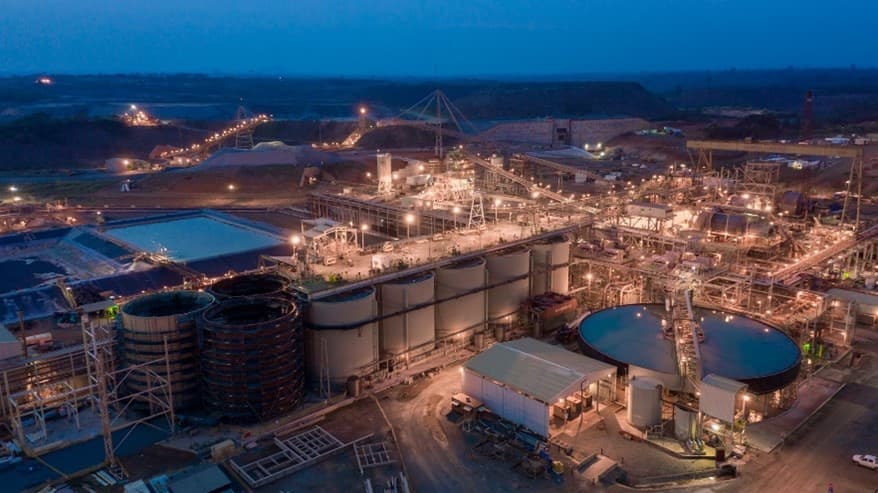
At Newmont, safe and responsible cyanide management is fundamental to our operations. Cyanide is used in the mining process to dissolve and separate gold from ore. Gold extraction through this method is currently the safest, most effective and economical technique in mining, and proper cyanide management is essential in preventing risks to human health and the environment.
In 2005, Newmont became one of the first signatories of the International Cyanide Management Code (ICMC or the Cyanide Code), which aims to improve the safe transport, storage and use of cyanide.
All our gold processing facilities that use cyanide must have a specific management plan, be certified by the ICMC, and conduct independent third-party audits to achieve recertification every three years. Newmont also requires that all company suppliers and transporters of cyanide products comply with the Cyanide Code.

In 2021, Newmont established a dedicated program to eliminate spills1 of cyanide-bearing solutions at our operations, initially focusing on spills above 50 milligrams per liter of weak acid dissociable cyanide (WAD-CN), which is the concentration level deemed by the ICMC to be protective of wildlife.2 This more stringent approach to eliminating spills exceeds the requirements of the Cyanide Code and will identify and address potential control failures that may lead to a spill.
As part of this renewed focus, Newmont also strengthened environmental reporting and investigation processes, established the global and cross-functional Cyanide Management Team, and launched an education campaign on cyanide management.
Looking forward, key activities will be to develop and finalize action plans for each site, based on Cyanide Vulnerability Assessments completed in 2021, and update environmental engineering design criteria with the goal of eliminating spills.3
Learn more about Newmont’s approach to cyanide management in our 2021 Sustainability Report.
“Implementation of our global standards, controls and procedures minimizes the risks associated with the transfer, storage and use of hazardous materials at our operations and reinforces our commitment to responsible mining as the foundation of our business.”
– Deon Annandale, Group Executive, Processing & Metallurgy